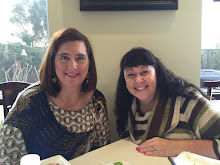
What a wonderful day downtown learning about a local robotics business that creates dark rides for amusement park fun! Add to it, lunch in Hemming Plaza, a ride on the Skyway, a peek into City Hall, and a read aloud in the children's room of the Public Library and you have an awesome day!!
Field Trip to Sally Corporation on PhotoPeach
For more information, visit their website. http://sallycorp.com/
Thursday, April 16, 2015

Wednesday, April 8, 2015
Fairy Tale Characters

We are in the middle of unit seven of Lucy Calkins e-book for the Reading Workshop Grade 2.

In our classroom, we are reading classic and fractured fairy tales - paying close attention to the cast of characters we meet!

We've noticed some character traits that seem to fit into most of our stories.

We chose some words that describe our character traits.


The boys and girls chose a book and worked in a small reading group to determine what part the characters played. They looked for text evidence to support their opinions.

Just for fun, we self assessed our own character traits and wrote them on post-it notes for our Jot Lot.

I have... Who has?


Wednesday, March 4, 2015
This Teacher Attends a Writing Conference!
.JPG)
I took pages and pages of notes. Thank goodness I had the weekend to process everything I learned. Here are just a few of the highlights:
The Units of Study were written for us to teach
authentic writing. Writing that exists
in a library or a book store – writing that is written for an audience. This is public, published writing – not
personal journal writing.
Students will gradually develop their knowledge of
conventions. First accept their approximations
and then correct them.
Teach students skills and multiple strategies to do
them. We need multiple strategies. For example, writing with a strong lead is
the skill (what to do). Strategies to do
this (how to do) include setting the scene with weather, starting with a moment
of action, starting with the character’s dialogue, etc.
Writing is a process. The less sophisticated the writer is… the
more stories he/she will need to produce.
Students will go through the process independently. Kindegarteners will produce a lot more
stories than second graders. Students
need to go through the process many times and will learn something new each
time. As the children have more ideas
and develop an understanding on conventions, etc. they will take longer on
their writing. (Gather ideasà
Draft à
Revise à
Edit à
Gather ideas à Draft à
Revise, etc.) Start new writing, instead
of making “this” piece better, teach them to make the “next” piece better.
Students need many pieces of writing, not one long
story. They need practice generating
lots of ideas. Ask them, “Where do you
go all the time? What do you see all the
time? What do you do all the time?”
Children need to write independently and be able to
work through the process. Have a writing
center in your classroom. Release your
control and allow children access to what they need. Your just right paper should have a few more
lines than you can fill up in your first go around. Children will need paper choices. Even second graders should be writing across
many pages. Each thought belongs on a
page. This is to give them a sense of
writing in paragraphs.
Celebrate the work not just the finished product.
For every flap, re-write, edit, cross out, etc.
that is a place where you've grown as a writer. You've made your work better.
Mid-workshop editing break. As adults, we write and edit as we go. It’s a habit of mind. To help teach this to children, stop during
the writing time and tell them you are going to have a 1 minute editing
break. Set the timer for 1 minute while
everyone reads their work looking for a specific thing to edit – could be
capital I, could be punctuation. Make
the necessary edits then and there and move on after a minute passes.
Strategies to Habits: put a piece of computer paper in a page
protector and divide it into four squares.
Each section should have a post it note with an individual writing goal
in it. Check these goals during writing
conferences. When the strategy has
become a habit move to a poster/chart/pocket.
No more than four at a time. Look
What We've Accomplished!
During a teacher meeting this week, I presented what I learned to my second grade ELA team. We all left the meeting with renewed writing and teaching energy!
If you ever have the chance to learn from these trail blazing professionals at TCRWP, I highly suggest you take it!
Wednesday, February 25, 2015
Have I Got A Book For You!

We are finishing up Bend II in Lucy Calkin's Second Grade Unit of Study: Writing About Reading - Opinions. In this unit, we have been writing letters which persuade our classmates, friends, and family members to read our favorite books.


Tuesday, January 27, 2015
Nonfiction Book Clubs
 |
| Students have been reading a lot of nonfiction books about a topic that they chose. While reading independently, they have been stopping to jot their thoughts. Sometimes they write on a Post It note and sometimes they write in their Reading Journal. |
 |
| Students take notes to prepare for the discussion they will have with their book club. |
 |
| Students do a lot of reading, but even more thinking. They spend time asking themselves, "Does this make sense?" |
 |
| Once students have identified important information and are ready to share specific parts of their book, they get together to talk. |
 |
| In book clubs, students take turns talking and look at the speaker. |
 |
| Nonfiction readers read closely to find the main idea. They talk about tricky parts, continue to ask questions, and compare what they've learned. |
Tuesday, January 20, 2015
Charting our learning on a Continuum
 |
| To begin our lesson, the teachers drew a long line across the front board. Each student got a sticky note to write on. We talked about riding a bicycle. The children thought about their skill level on bike riding and wrote a few words explaining how comfortable they are with bicycle riding. |

 |
 |
| Students placed their sticky notes on the continuum. Notes on the left side stated that the children were not comfortable on a bike or could not ride a bike. Students that were very comfortable riding a bike placed their note in the middle or toward the right side. Students on the extreme right side noted some tricks that they could do on a bike. |
 |
| Less comfortable on a bike. |
 |
| Middle of the road (so to speak). The real learning in this lesson took place during our discussion. The teachers asked the children if it was possible to move up and down on the continuum. How would the children on the left side move to the middle? Who could they talk to? What could they do? We applied the continuum to other situations... surfing, reading, writing, etc. Are you always on the left side? Middle? Right side? When you find yourself in a situation that you want to improve, how can you go about it? |
Subscribe to:
Posts (Atom)